Headline result: A modelled multi-million-dollar yearly productivity opportunity from relatively low investment in home charging.
At a Glance
Organisation: Roadside service organisation
Fleet: ~170 fleet assets
Suitable now: Around half, with further potential when long days are planned for
The Situation
The roadside service organisation considered this one of its most difficult fleets to transition. Most vehicles were garaged at staff homes, and it wanted to understand the suitability, cost and emissions implications of moving to electric.
The Constraint
Home-charging access was a major unknown. Occasional long days also needed an operational plan rather than being treated as an automatic barrier to transition.
What We Did
We assessed electric suitability against real daily distances and peak days, modelled whole-of-life costs with and without home charging, and developed a staged transition roadmap.
What We Found
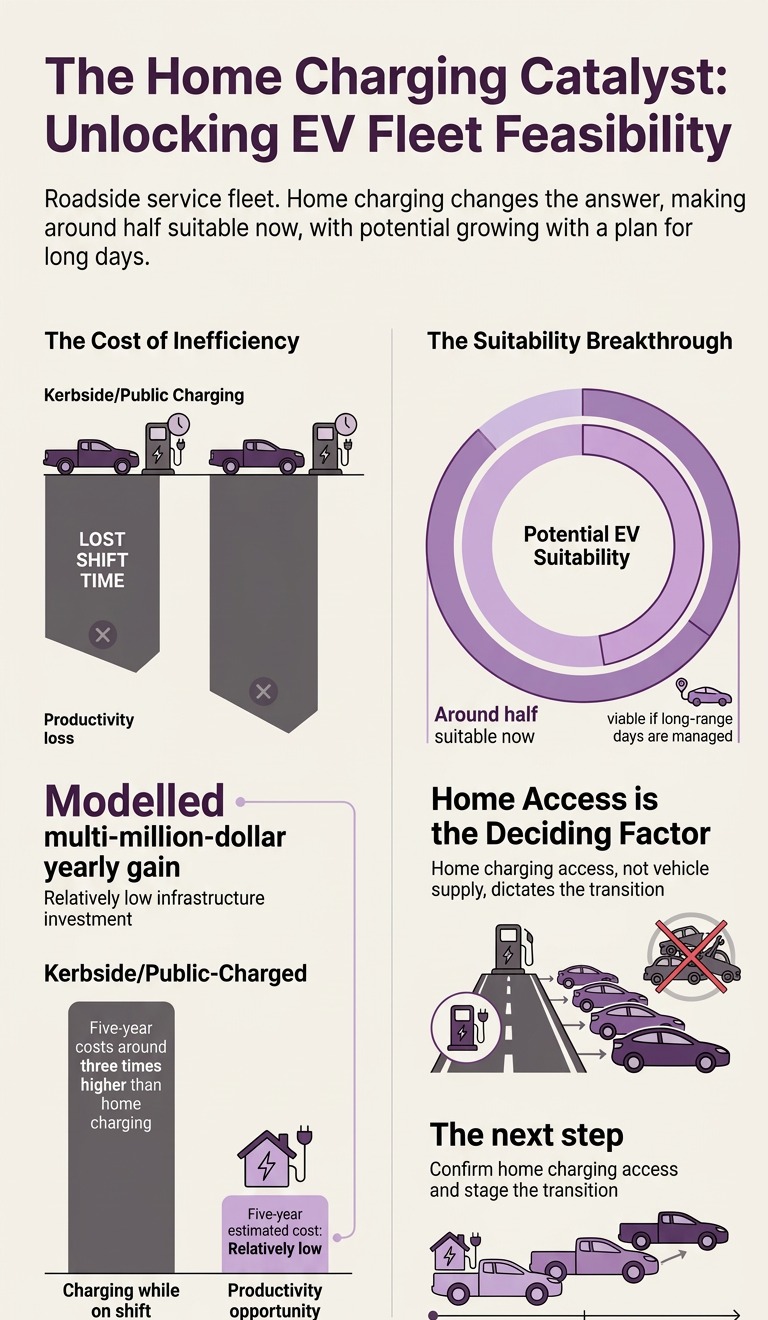
Around half the fleet was suitable for an electric option now, with further potential once vehicles had a plan for their long days.
Home charging brought the electric ute closer to diesel on cost. At around 21,000 kilometres a year, diesel was around $4,000 cheaper over five years, with break-even at around 25,000 kilometres a year.
Kerbside charging instead meant lost time during shifts, pushing the modelled five-year cost to around three times the home-charging scenario.
The model identified a multi-million-dollar yearly productivity opportunity from a relatively low investment in home chargers. This was a modelled opportunity, not realised savings.
What We Recommended
Confirm home-charging eligibility driver by driver and prioritise that infrastructure. Stage vehicle replacement around operational readiness and give long days a plan through charging, vehicle swaps or retaining suitable existing vehicles.
Charger installation and access were central to the pace of the roadmap.